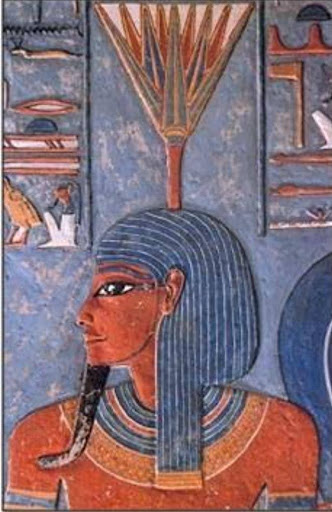
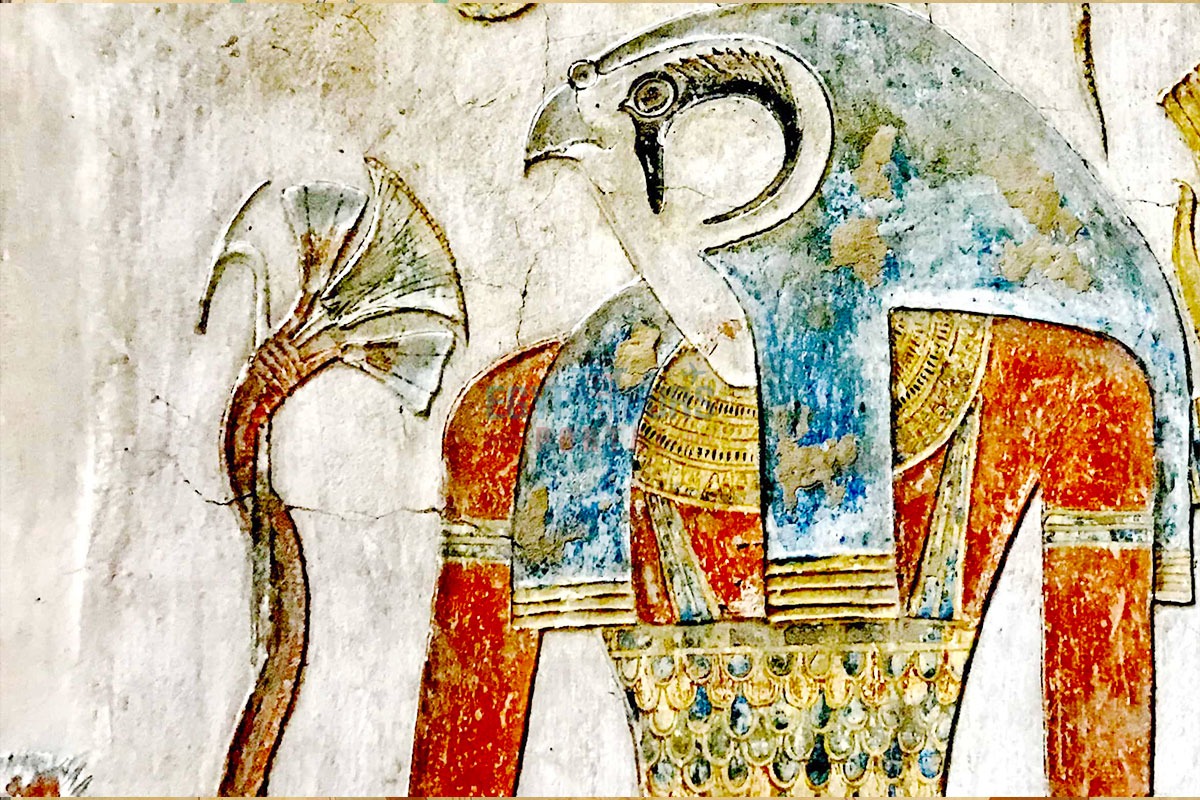
The lotus flower: The ancient Egyptian called the lotus flower “Soushin,” so he gave each color in the flower its own name. The white one was “Sushun,” the blue one was “Sarbad” or “Serbti,” and the pink one was “Nokhba” or “Nahb.” The lotus flower symbolizes the four elements of creation. Its roots are in the clay, its stems are in the water, and its leaves are in the air. Its flower absorbs the element of light from the sun every morning, meaning that at the sunrise of each new day, the lotus flower emerges from under the surface of the swamp waters and its leaves open to receive the sunlight and absorb it inside it, and with When the sun sets, the flower closes its leaves and dives under the surface of the water to wait for the sun to rise again the next morning.
The ancient Egyptian lotus (seshen) symbolized creation, rebirth, and divine beauty, representing the daily cycle of blooming and closing with the sun, and the emergence of the first god from primordial waters.